Is reindeer sledding kind to the reindeer?
It is a fair question, and a good sign that you ask it. Reindeer have pulled Sami sleds for centuries, and a short ride at walking pace is well within what a healthy adult animal can do. Whether a particular camp treats its herd well is something you can partly judge yourself.
Working animals, not wild ones
Norway's reindeer are semi-domesticated. Every animal has an owner, marked in its ears, and the herds have lived alongside people for a very long time. Draught reindeer, the ones that pull sleds, are trained young and get used to harness and people. Tourist camps keep a working herd close to the camp and feed it through the winter, and good camps rotate the animals that pull sleds. Norway's animal welfare law applies to them like to any other animal kept by people.
Why short and slow is a good sign
A reindeer is strong for its size but lighter than most people imagine, with a body built for walking through snow, not for hauling heavy loads at speed. That is why good camps keep tourist rides short and slow, lead the animals on foot and set limits. Tromsø Lapland states a weight limit of 110 kg (243 lb) on its day tour and 100 kg (220 lb) in the evening, "to ensure our reindeer stay safe and healthy", and shortens the ride when the snow is poor. Those are the kind of rules you want to see. How the ride works is in its own guide.
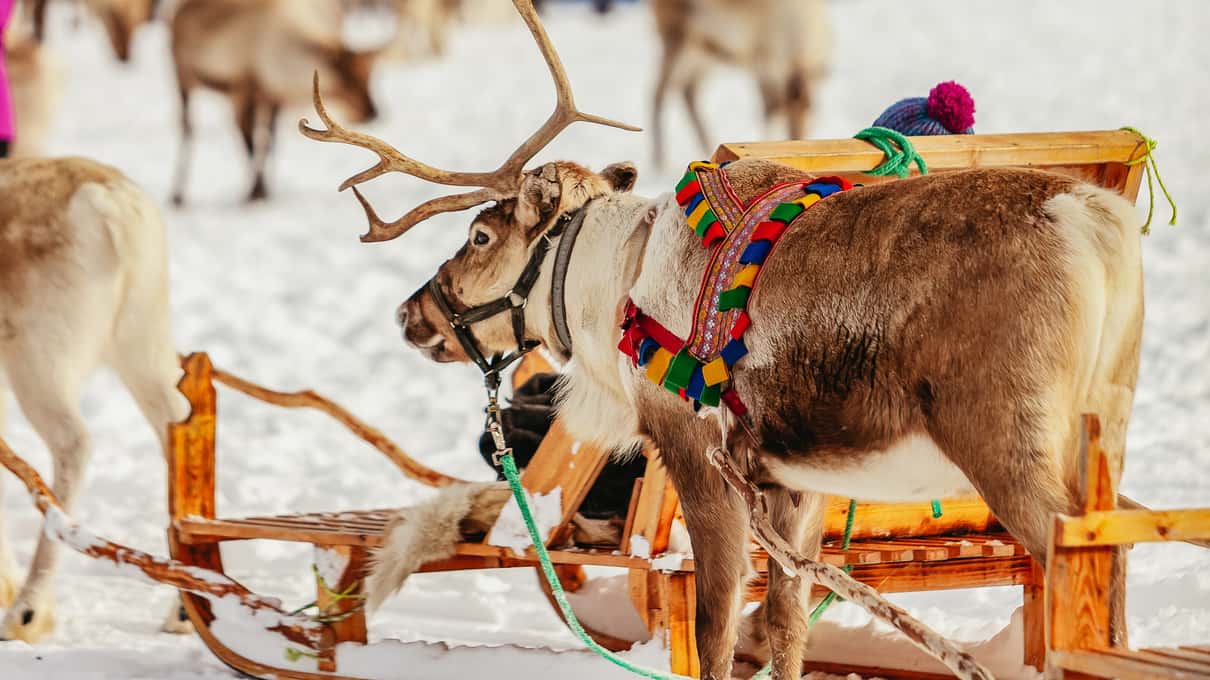
Signs of a camp that cares
- Healthy-looking animals: thick coats in winter, alert eyes, no obvious limping.
- Rides at walking pace, led by a guide, with rest between rounds.
- Limits stated openly: weight, snow conditions, group sizes.
- Proper feed: pellets or lichen handed out by staff, not bread or snacks from visitors.
- Guides who talk about the animals, their names, their temperament and the herd's year.
- Space: a herd with room to move away from people when it wants to.
What the camps we compare say
The camp of our pick, Tromsø Arctic Reindeer, keeps a herd of about three hundred. Camp Tamok keeps five or six reindeer for its rides, which makes for a quieter visit. Reindeer Experience Tromsø limits groups to 45 people at a time, each with its own guide, which it says is also meant to give the animals a better environment. None of the listings is a welfare certificate, and we have not inspected the camps ourselves. Your own eyes on the day are the best check.
A big herd and a working camp
Tromsø Arctic Reindeer's herd of about three hundred, a sled ride, lunch in the lavvu and Sami herders who will answer your questions, ~$197.
How you can help
- Feed only what the guide gives you, and hold the bucket low and still.
- Do not chase, corner or try to ride a reindeer; Best Arctic lists riding the animals as not allowed, and so should everyone.
- No flash, drones or loud music near the herd.
- Be honest about your weight if a limit applies.
- If something looks wrong, say so in your review. Operators read them.
A few reindeer facts
Reindeer are the only deer whose females grow antlers too. Their eyes change from gold in summer to blue in winter, to see better in the long dark. Their hooves spread wide on snow and become sharp-edged in winter to dig for lichen. And they click when they walk, from a tendon in their feet, so the herd can hear itself in a blizzard. The people who herd them are in our culture guide, and how children can meet them safely in our family guide.